
Residential roofing (repair and replacement)
Leak tracing, shingle repairs, flashing work, ventilation fixes, full tear-offs, and reroofs based on the roof's condition and the owner's timeline.
Serving Milwaukee, Wisconsin & surrounding areas
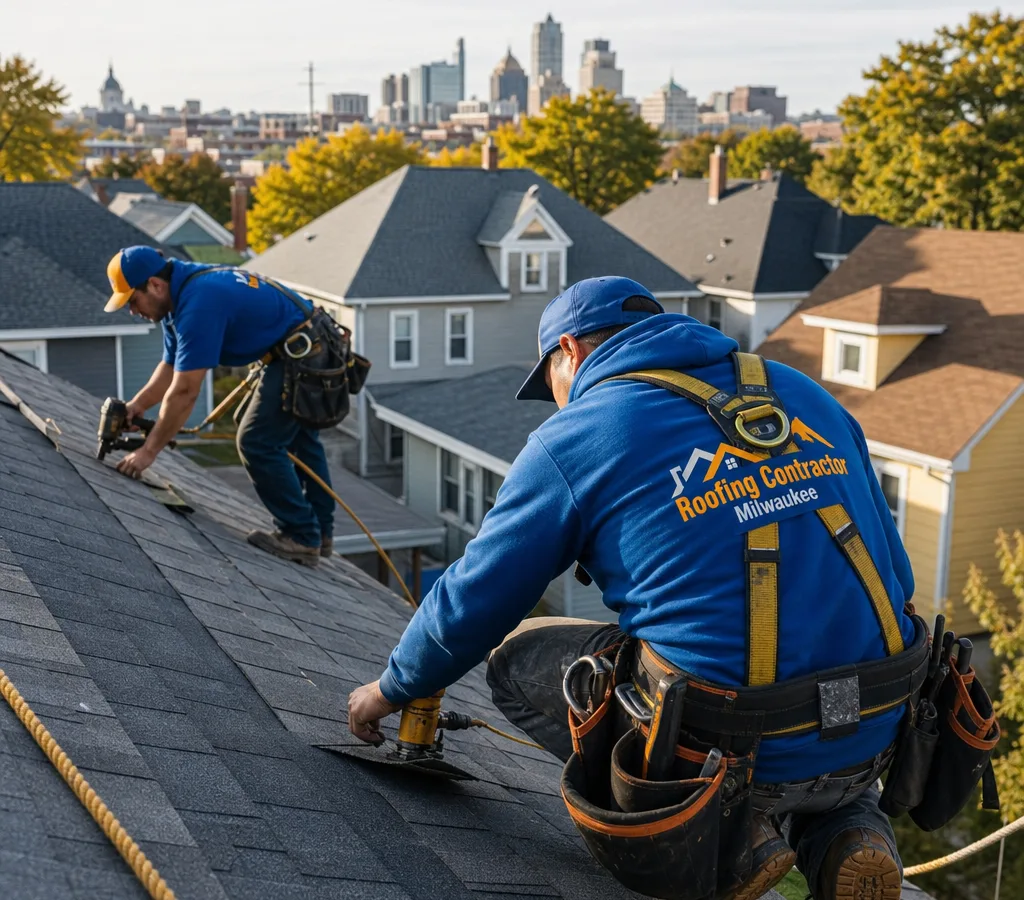
Residential & Commercial Roofing · Milwaukee, WI
Get a clear inspection, a written scope, and workmanship that holds up to Wisconsin wind, snow, and freeze-thaw cycles for both homes and businesses.
What Homeowners Should Expect
If you are searching for roofing contractors in Milwaukee WI, you are usually trying to solve one of three problems: a leak that needs fast diagnosis, a roof that is aging out, or a commercial roof that needs a plan you can budget and schedule around. A good contractor makes the next steps simple: inspect the full system—not just the visible leak—explain what is repairable versus what is worn out, and give you a written scope that matches the roof you actually have.
Milwaukee roofs take a beating. Heavy snow loads, ice dams, spring wind, and repeated freeze-thaw cycles can open up nail pops, crack flashing, and push water where it should never go. That is why the right approach is always system-first: decking condition, underlayment, ventilation, flashing, and drainage. Shingles, tiles, metal, or membrane are the top layer, but most leaks start at penetrations, transitions, valleys, and edge details.
Roofing Contractor Milwaukee works across residential and commercial properties in Milwaukee, WI. Our roofer services in Milwaukee are built around the same goal: accurate inspections, clear scopes, and durable installs that make sense for the building.
Complete Roofing Scope
Leak tracing, shingle repairs, flashing work, ventilation fixes, full tear-offs, and reroofs based on the roof's condition and the owner's timeline.
Scheduled inspections, leak response, restorative coating options where appropriate, and replacement planning that considers access, occupants, and business hours.
Documented findings with photos, targeted emergency dry-in when needed, and a scope that separates urgent water entry points from longer-term items.
Drain and scupper checks, membrane seam and penetration review, and slope-to-drain evaluation because ponding water shortens roof life.
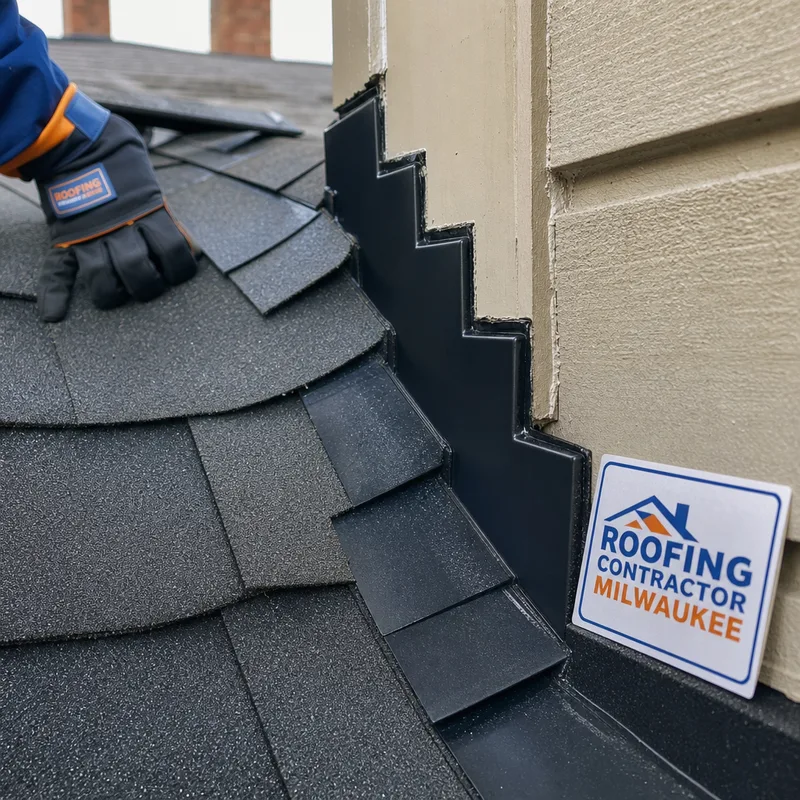
Chimneys, skylights, plumbing stacks, step flashing at sidewalls, and counterflashing are where workmanship shows up years later.
Recommendations that protect the roof edge and fascia and reduce ice buildup risk, especially on older rooflines with complex drainage paths.
Roof Inspection Details
A proper inspection starts outside and ends inside. On the roof, we look for lifted or missing shingles, granule loss, soft spots, exposed fasteners, failed sealant, and flashing separation. We also check roof penetrations and edge details because Milwaukee wind and winter ice often exploit those first.
Inside, we look for staining patterns, condensation, and ventilation issues that can mimic a roof leak. Poor attic ventilation and warm-air escape can contribute to ice dam formation in winter, which pushes water under shingles and into eaves and walls.
You will get a straightforward recommendation in plain language: what is causing the issue, what needs immediate attention, and what can be monitored. If replacement is the right call, we outline material options—for example, architectural asphalt shingles, standing seam metal, or appropriate commercial membranes—plus the key details that control performance: underlayment selection, flashing plan, intake and exhaust ventilation balance, and how we handle valleys, ridges, and transitions.
Inspection-to-Closeout Process
01
We walk the roof where safe, check penetrations and edges, evaluate drainage on low-slope areas, and review interior signs of moisture when needed.
02
You receive a scope that separates must-fix items from elective upgrades, such as ventilation improvements, and notes material choices and warranty information.
03
We confirm access points, parking and logistics, protection for landscaping and entryways, and any business-hour constraints for commercial buildings.
04
Work follows manufacturer specs and local code requirements, with attention to flashing, underlayment, ventilation, and clean transitions because those control long-term performance.
05
We review the completed work, share photos of key details, and explain maintenance steps that help you avoid recurring leaks and premature wear.
Inspection-Based Pricing
Most roofing work in Milwaukee typically ranges from about $350 to $1,500 for common repairs, while a full residential roof replacement often lands around $8,000 to $18,000+ depending on size, pitch, tear-off needs, and shingle choice. Commercial scopes vary widely, but targeted repairs commonly start around $750 to $2,500, with replacements priced by roof type, access, and insulation or drainage details.
Your exact price depends on layers to remove, decking condition, flashing complexity, ventilation changes, and site access. The final scope and cost are confirmed after an on-site inspection and measurements.
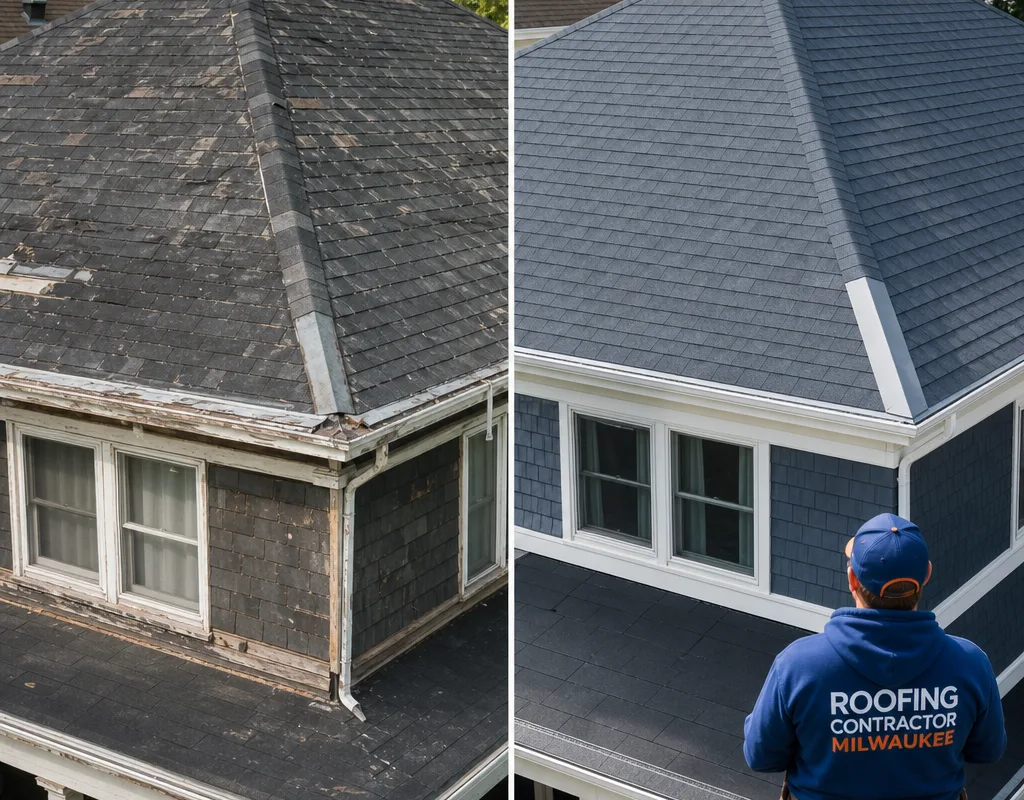
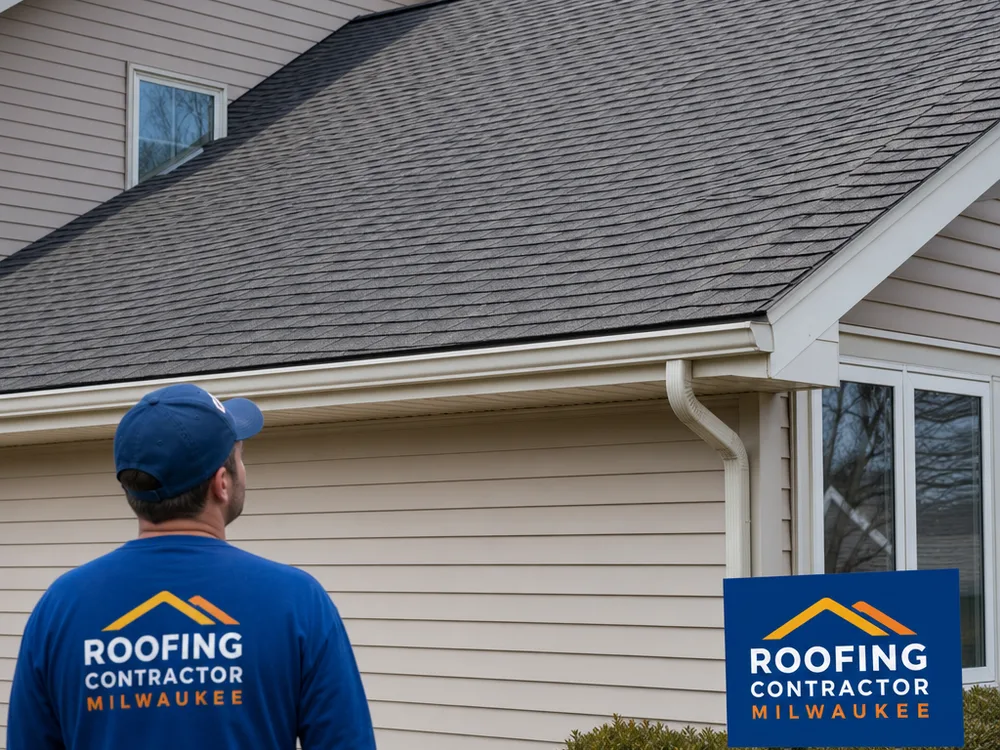
Field Work & Finished Results
Homeowner Questions
Clear answers about urgent leaks, commercial roofs, repair decisions, written estimates, decking, and older Milwaukee homes.
For active leaks, the goal is a quick assessment and a same-day or next-available dry-in when conditions allow, followed by a permanent repair once the roof surface is safe to work. Milwaukee weather can limit immediate work on steep or icy roofs, so we focus first on stopping water entry and documenting the true source so the fix lasts.
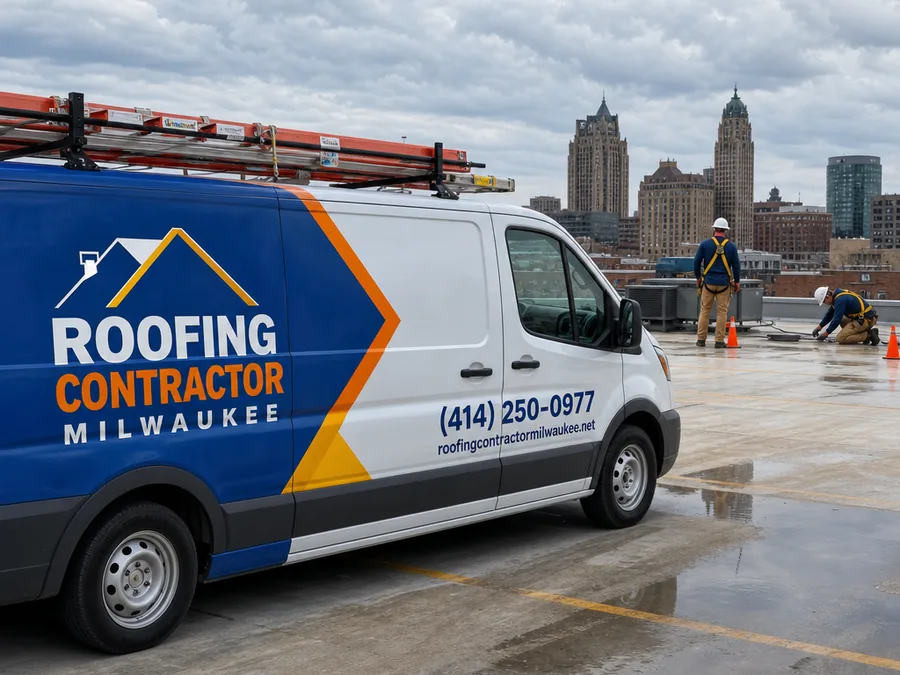
Yes. Commercial work often needs clear scheduling, access planning, and documentation, so we build scopes that separate urgent leak points from preventive maintenance and longer-term replacement planning. For flat and low-slope roofs, we pay special attention to drains, scuppers, seams, and penetrations because ponding and seam separation are common failure points.
A repair makes sense when the damage is isolated and the surrounding roof is still serviceable, while replacement is usually the better value when failures are widespread, the roof has multiple past layers, or critical details like flashing and underlayment are compromised. We show you what we see on the roof and explain the decision in terms of risk: the likelihood of recurring leaks versus the cost of addressing the system all at once.
A good estimate lists tear-off scope, including number of layers, underlayment type, flashing approach for chimneys, walls, valleys, and penetrations, ventilation plan, material brand and grade, debris disposal, and warranty terms. If any of those items are vague, it is harder to compare bids from roofing contractors in Milwaukee WI on equal footing.
Yes, decking condition is verified as part of a tear-off, and any soft, rotted, or delaminated areas should be replaced before the new system goes on. In Milwaukee, repeated freeze-thaw and long-term small leaks can damage decking around eaves, valleys, and penetrations, so it is important to confirm the substrate is sound.
Yes, with the right safety setup and planning. Older homes often have complex rooflines, multiple valleys, and masonry chimneys, which increases the importance of step flashing, counterflashing, and careful shingle integration at transitions.
Plan Your Roof Work
Tell us what you are seeing, and we will schedule an inspection and provide a written scope you can use to make a confident repair or replacement decision.